
Every expat blog and YouTube relocation channel sells the exact same fantasy: step off the plane in Europe, throw your car keys in the garbage, and stroll everywhere with a woven basket full of fresh flowers.
If you believe that, this is going to hit you like a frozen baguette to the face.
Yes, France has phenomenal transit. But France is also a country with hundreds of tiny rural villages and suburban satellites where owning an automobile is not optional. It is mandatory for survival.
Here is the trap people fall into: they open French real estate sites like LeBonCoin or SeLoger, find a gorgeous half-timbered house in a village twenty minutes outside Colmar or Strasbourg for half the price of a city apartment, and see the line: “Desservi par les transports en commun” (served by public transit).
They think they beat the system. They sign the lease or buy the place. Then reality arrives on Monday morning.
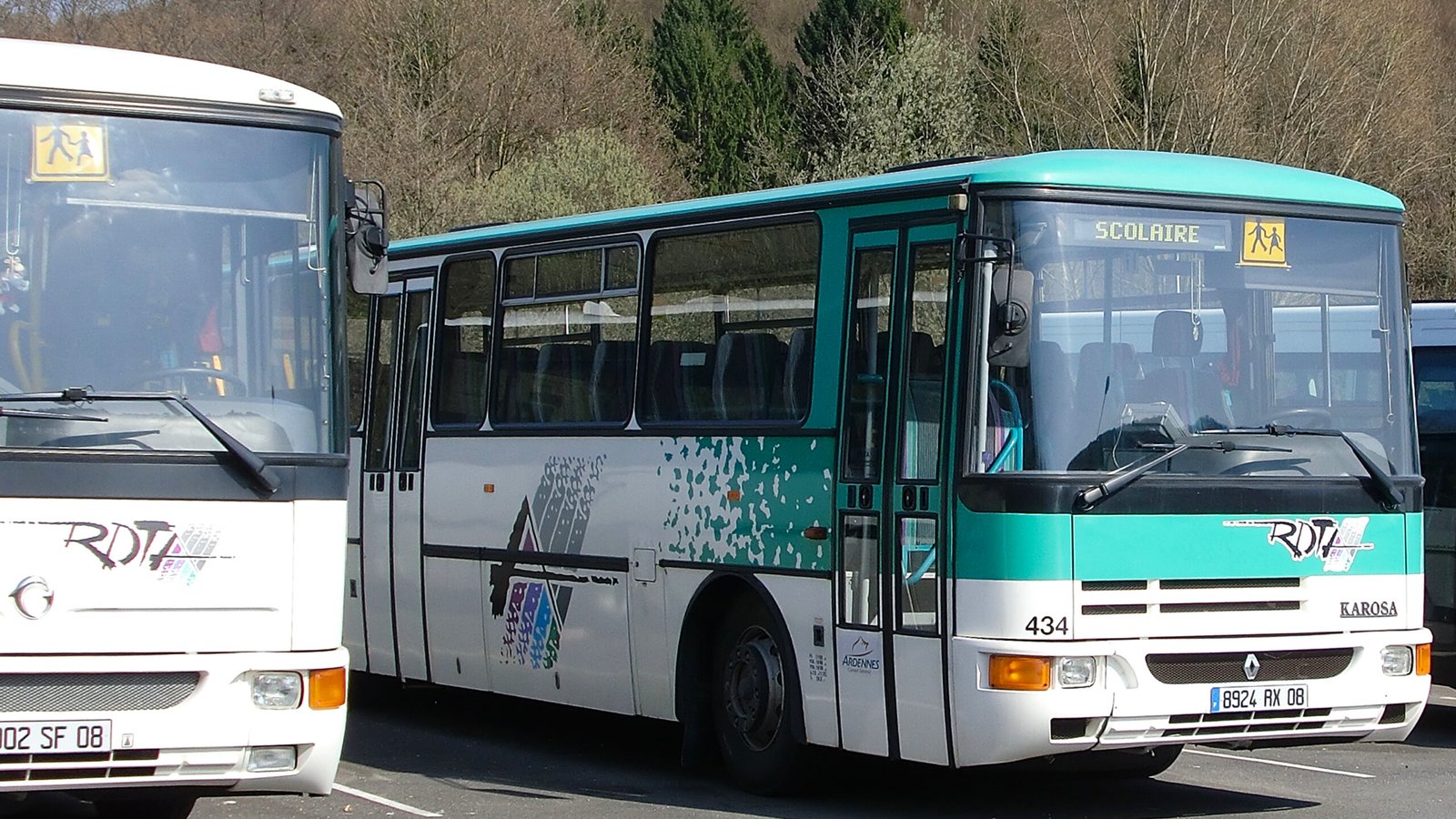
That bus stop down the street? It is not a city bus. It is a “circuit scolaire,” a school bus route operated by the regional Fluo Grand Est network or a local intercommunal syndicate.
Here is what a circuit scolaire actually means in daily practice:
One bus comes through at 7:10 AM to scoop up teenagers for the local collège or lycée. Another bus drops them back off around 5:15 PM. That is it.
There is no bus at 10:00 AM.
There is no bus at 1:30 PM.
There is no bus at 8:00 PM.
On Wednesday afternoons, the schedule breaks because French schools let out early.
On Saturdays and Sundays, the service drops to zero.
During the 16 weeks of French school vacations (two weeks in autumn, two weeks at Christmas, two weeks in winter, two weeks in spring, plus July and August), the service vanishes entirely.
It doesnt matter anyway, because you can’t take that bus if you wanted to.
Expats love to claim France doesn’t have school buses. What they mean is France doesn’t have yellow metal breadboxes stopping at every driveway. They use modern touring coaches with seatbelts and climate control. But instead of door-to-door service, they drop kids at a single central square by the church or village hall and expect them to walk the rest of the way home in the dark.
There is a huge cultural upside to this that several viewers pointed out in our comments: French kids build independence fast.
In suburban America, a yellow bus collects kids at their front doors and drops them right back at the same place. A kid can grow up for a decade with zero spatial awareness beyond their own lawn.
In an Alsatian village, dropping twenty kids at the central square means they walk. They handle the cold, deal with traffic, walk home with their peers, and learn the layout of their town before middle school. It is not an infrastructure failure; it is an entirely different cultural expectation that treats kids like capable human beings rather than fragile cargo.
Now imagine trying to live your daily life on that schedule.
You cannot do a weekly grocery run on a school bus. You cannot take your kid to an urgent dental appointment at 11:00 AM on a Tuesday. You cannot get home from dinner with friends in town. …without your own transportation.
Worse, many postcard-perfect Alsatian villages have turned into “communes dortoirs” (dormitory towns). The residents sleep there and drive everywhere else for work and errands. The local boulangerie closed five years ago. The village butcher retired with no successor. There is no épicerie, no general store, and no doctor. If you run out of milk or need ibuprofen, your only option is a five to ten mile drive to the nearest Super U, Carrefour, Leclerc, or Intermarché commercial strip.
If you don’t own a car in one of those villages, you are not living a charming European life. You are on house arrest in a picturesque stone prison. That is what many people move to France in order to escape.
If you genuinely want to live in Alsace without a car, the rules are rigid:
First option: Live inside the urban fabric of a real city or large town. Colmar, Strasbourg, Mulhouse, or dense inner rings where municipal buses run every 10 to 15 minutes, bike lanes are separated, and daily necessities are within a 15-minute walk.
Second option: If you choose a village, it must sit on an active SNCF train line. And not just any track: you need a station with TER Fluo trains stopping at least once an hour in both directions throughout the entire day, located no more than a 15 minute walk from your front door.
If a listing does not meet one of those two strict standards, assume you need a car. Otherwise, you are simply trading American suburban car dependency for French country car dependency, except fuel costs seven dollars a gallon and the roads are three inches wider than your mirrors.
None of this is an attack on France. When you are inside the right transit corridors, French trains and city buses run circles around anything in North America.
But romantic daydreams make for terrible logistics. We owe a massive thank-you to the viewers and locals in our comments who made sure we were aware, shared their actual daily timetables, and forced us to look at village transit without rose-colored glasses. That community feedback can save many from making a costly mistake.
France rewards people who do the legwork. Fall in love with the half-timbered architecture all you want, but check the Saturday train schedules, count the minutes to the nearest working platform, and confirm the local bakery is actually open before you sign a lease.
Escape the Chaos…